
Cedar vs. Heat-Treated Hemlock for an Outdoor Sauna on a Budget
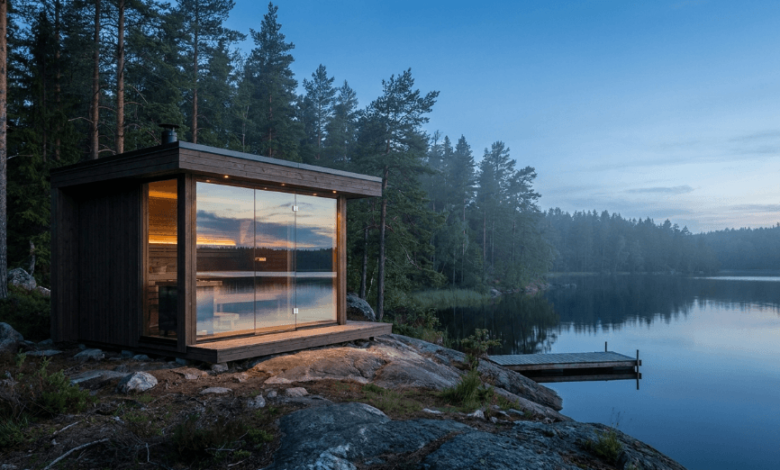
Cedar costs more and comes with natural oils that resist rot, insects, and mildew on their own, plus a distinctive aroma many people associate with sauna itself. Heat-treated hemlock costs less, holds up nearly as well thanks to a kiln process that stabilizes the wood and closes off the sugars mildew feeds on, but depends more on consistent exterior sealing to match cedar’s long-term durability. For a genuinely tight budget, hemlock is the more practical choice; for anyone prioritizing the classic sauna experience and willing to pay for it, cedar remains the benchmark.
What Actually Makes Cedar Different From Other Softwoods?
Western red cedar contains natural oils and compounds that make it inherently resistant to rot, decay, and insect damage without any chemical treatment. That resistance is why cedar has been the traditional choice for outdoor structures, decking, and saunas for generations. It is also lightweight relative to its strength, dimensionally stable as it dries, and has a fine, straight grain that takes a smooth sanded finish well on interior bench surfaces.
What Does the Heat Treatment Actually Do to Hemlock?
Heat-treated hemlock goes through a kiln process at high temperature that alters the wood’s cell structure, driving out much of the natural moisture and breaking down the sugars that mold and mildew feed on. The result is a wood that resists mildew and holds up to repeated heat cycling better than untreated hemlock would, at a price point below cedar because the base lumber itself costs less before treatment. It is a manufactured improvement on a naturally less durable species, not a naturally superior wood competing on its own terms.
How Big Is the Price Difference in Practice?
Cedar commands a noticeable premium over heat-treated hemlock, often enough to be the deciding factor for budget-conscious buyers comparing otherwise similar units. Because a full sauna uses a significant amount of lumber across the walls, benches, and roof, that per-board-foot difference compounds quickly across an entire build. Shoppers comparing options should check exactly which wood a listed price includes; some manufacturers use hemlock for wall panels and cedar only for benches, which changes the calculation. Checking a detailed product page, such as those on SweatDecks.com, for the specific species used in each component is worth the extra few minutes before comparing prices across retailers.
Which Holds Up Better to Weather Over Time?
Both species perform well outdoors when properly maintained, meaning exterior sealant reapplied on a regular schedule. Where they diverge is what happens if that maintenance lapses. Cedar’s natural oils provide a baseline level of protection even if sealing falls behind schedule, buying some extra time before real damage sets in. Heat-treated hemlock’s resistance comes primarily from the kiln process itself, which is a one-time treatment; once the exterior sealant wears thin, hemlock has less of a natural backstop than cedar does. Neither wood is maintenance-free, but cedar is more forgiving of an occasionally missed reseal.
Does the Wood Choice Affect the Sauna Experience Itself?
Cedar’s aroma, especially when the wood heats up, is part of the sensory experience many people associate with a traditional sauna, and it intensifies with the direct heat and humidity inside the cabin. Heat-treated hemlock has a milder scent, more subtly warm than distinctly aromatic, which some people prefer if they find cedar’s smell too strong in an enclosed space. Both provide a similar tactile surface once sanded smooth, since bench comfort has more to do with construction quality than species.
How Do the Two Woods Compare on Weight and Workability?
Cedar is notably lightweight for its strength, which makes it easier to handle during a DIY assembly and reduces stress on the frame and foundation over the structure’s life. Heat-treated hemlock, after the kiln process removes much of its moisture, is also relatively light, though slightly denser than cedar in most grading. Both cut and sand cleanly with standard woodworking tools, and neither requires specialized equipment beyond what a typical DIY kit assembly calls for. Where hemlock can be marginally trickier is in matching color and grain across boards from different production runs, since the heat treatment can produce slight variation batch to batch that cedar’s more consistent natural coloring avoids.
Does the Wood Choice Affect Long-Term Value?
A cedar sauna generally holds its condition and visual appeal longer with the same maintenance schedule, which matters if resale or long-term ownership value is part of the decision. That said, the gap narrows considerably when hemlock gets consistent care, and plenty of well-maintained hemlock saunas outlast poorly maintained cedar ones. The honest way to think about it: wood species sets the ceiling and the floor slightly differently, but maintenance habits determine where within that range any individual sauna actually ends up after a decade of use.
Which Wood Should a First-Time Budget Buyer Choose?
For a first sauna on a genuinely limited budget, heat-treated hemlock delivers most of what matters, mildew resistance, dimensional stability, and a reasonable lifespan, at meaningfully less cost, provided the exterior gets sealed on schedule. If the budget allows even a modest upgrade, cedar benches paired with hemlock wall panels is a common middle ground that keeps the highest-contact surfaces in the premium material while saving on the larger wall area. Buying all cedar makes the most sense for anyone planning to keep the sauna for decades and wanting the lowest possible long-term maintenance burden.
Frequently Asked Questions
Is heat-treated hemlock a downgrade from cedar?
Not really. It is a different set of trade-offs rather than a straightforward downgrade. Hemlock loses some of cedar’s natural aroma and slightly higher rot resistance, but the kiln treatment process gives it real stability and mildew resistance at a noticeably lower price.
Does cedar smell stronger than heat-treated hemlock?
Yes, cedar has a distinctly stronger, more aromatic scent from its natural oils, especially when new and when heated. Heat-treated hemlock has a milder, warmer smell from the kiln process itself, more toasted than aromatic.
Which wood species is more sustainable for a sauna?
Both are widely farmed softwoods and neither is generally a conservation concern in the regions typically used for sauna lumber. Sourcing from a supplier who can show responsible forestry certification matters more than the species choice itself.
Can cedar and heat-treated hemlock be mixed in one sauna?
Some manufacturers use cedar for benches and backrests, where skin contact and aroma matter most, and hemlock for wall paneling, where cost savings add up over a larger surface area. This is a common way to balance budget and experience in one build.
Which wood species ages better outdoors?
With proper exterior sealing maintained on schedule, both age similarly well over time, gradually silvering if left unsealed or holding their tone if resealed regularly. Cedar has a slight edge in long-term rot resistance if sealing lapses, since its natural oils provide backup protection hemlock does not have.
References
- Laukkanen, T., et al. “Cardiovascular and Other Health Benefits of Sauna Bathing: A Review of the Evidence.” Mayo Clinic Proceedings, 2018. https://pubmed.ncbi.nlm.nih.gov/30077204/
- Kauppinen, K. “Benefits and risks of sauna bathing.” The American Journal of Medicine, 2001. https://pubmed.ncbi.nlm.nih.gov/11165553/
- Laukkanen, T., et al. “Effects of heat and cold on health, with special reference to Finnish sauna bathing.” American Journal of Physiology – Regulatory, Integrative and Comparative Physiology, 2018. https://pubmed.ncbi.nlm.nih.gov/29351426/


